The word macro has become as overloaded as the word bokeh. Phone manufacturers use it for any close-up mode that holds focus at fifteen centimetres. Lens manufacturers use it for zoom lenses that get vaguely close. The result is that the original meaning, which is fairly precise, has been smoothed away to almost nothing. A macro lens, properly speaking, is a lens that can render its subject at life size on the sensor. Half of that subject’s actual width fills half the sensor’s actual width. Nothing closer is true macro. Anything closer than life size is technically photomacrography.
What 1:1 actually means
The ratio comes from the relationship between the size of the subject in the real world and the size of its image on the sensor. At a magnification of 1:1, a 24mm-wide insect, end to end, fills a 24mm-wide image on a full-frame sensor. That is the entire width of the frame. A 12mm-wide insect fills half the frame. A 6mm-wide insect fills a quarter. This sounds obvious but it is the source of an enormous amount of confusion about what macro lenses can and cannot do.
A 2:1 magnification means the image on the sensor is twice the size of the real subject. A 12mm subject fills the entire 24mm-wide frame on full-frame. This is genuinely strange territory, because no lens designed without close-up correction can do it well, and the optical compromises are severe enough that purpose-built ultra-macro lenses like the Laowa 25mm 2.5-5x are essentially their own category.
A 1:2 ratio, sometimes called half life size, means the image is half the size of the real subject. Many lenses advertised as macro stop here. They get you closer than a normal lens but do not reach life size, and the difference is significant if you are photographing small insects. A more thorough walk through reproduction ratio, working distance, and related macro terms covers the practical side of these numbers in detail.
What changes about depth of field
The other thing that 1:1 magnification does, beyond the obvious filling of the frame, is collapse depth of field to almost nothing. At normal photographic distances, a small aperture gives you several metres of acceptable focus. At life size, the same aperture gives you a few millimetres. At 2:1, the same aperture gives you well under one millimetre. This is not a property of macro lenses being soft or having narrow depth of field by design. It is the physics of close focusing.
Stopping down to compensate runs into a different limit, which is diffraction. Past a certain aperture, usually around f/11 to f/16 depending on sensor pixel pitch, the diffraction starts to soften the image faster than the additional depth of field adds usable focus. Many macro shooters end up at f/8 to f/13 as the practical sweet spot, accept the thin depth of field, and either compose around it or focus-stack multiple frames into a single final image with software. A detailed technical breakdown of macro lens design and diffraction at close distances goes into the numbers behind each of these tradeoffs.
Working distance and why focal length matters
Two macro lenses can both reach 1:1, and they can be utterly different to use. The variable is working distance, which is the gap between the front of the lens and the subject when the lens is focused at maximum magnification. A 50mm macro at 1:1 has a working distance of a few centimetres. A 100mm macro at 1:1 has a working distance closer to 15 centimetres. A 180mm macro at 1:1 can hold the lens a foot away from the subject.
This matters for several reasons. The most obvious is that for living subjects, a longer working distance means less chance of scaring the insect or animal off before you can get the shot. A bee on a flower will tolerate a 180mm lens at fifteen centimetres far better than it will tolerate a 50mm lens at three. The less obvious reason is lighting. At three centimetres there is no room to get a flash or a continuous light source between the lens and the subject. At fifteen centimetres there is, and you can shape the light. Most experienced macro shooters end up preferring 90mm to 105mm as a general purpose focal length, with longer lenses for skittish subjects and shorter ones for product or static work where the additional working distance is not worth the size and weight of the longer lens.
The autofocus question
At 1:1 magnification, autofocus becomes either marginally useful or outright counterproductive. Depth of field is so thin that any small drift of the focus point produces a soft frame. Most experienced macro shooters either turn autofocus off entirely and use a focus rail to slide the camera back and forth by tiny increments, or they leave the lens on a fixed manual focus distance and physically lean toward and away from the subject until the critical point pops into sharpness. This is the camera-as-microscope approach, and it works well enough that some lenses sold for serious macro work, like the Laowa range, do not even include autofocus.
Subject detection helps less than you might expect. Insect detection modes exist on some bodies, but at extreme magnification the lens is often refocusing within a few millimetres’ range, and any servo overshoot is enough to throw off the shot. Manual focus with magnified view and focus peaking, used in combination with the techniques our notes on adapting older glass describe, is usually faster and more reliable than fighting the autofocus system at high magnification.
What true macro lenses do better than alternatives
Several other options exist for getting close. Extension tubes go between the camera body and a normal lens, increasing the magnification by reducing the lens-to-sensor distance for any given focus setting. Close-up filters screw onto the front of a normal lens like a filter and act as a magnifying glass. Reversed lens techniques mount a lens backward on the camera, with adapter rings, for extreme magnification with a normal prime.
All of these work. None of them give you the optical correction of a lens designed for close focusing. A normal lens designed to be sharp at infinity is not necessarily sharp at three centimetres. The aberrations that the designer corrected at normal working distances reappear, sometimes severely, when you push the lens far past its intended use. A purpose-built macro lens has been corrected for performance at the close end of its focus range, often at the expense of slightly weaker performance at infinity. That is the trade, and it is why a dedicated macro lens still produces visibly cleaner results than improvised solutions for serious close-up work.
What the dual-purpose claim actually means
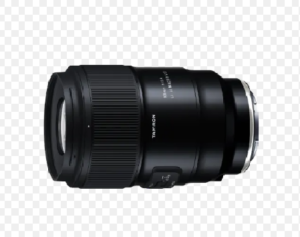
Most macro lenses are advertised as dual-purpose, meaning they can be used as portrait lenses or short telephotos when not being used for close-up work. This is usually accurate but with one caveat. The internal floating element designs that allow excellent performance at close focus tend to produce slightly clinical, very sharp rendering at portrait distances. A lens optimised for close work is often less flattering for skin than a dedicated portrait lens, even when both are sharp. The 90mm and 100mm macro lenses from various manufacturers are perfectly usable for portraits, but they will reveal pores, fine lines, and texture in a way that a softer-rendering portrait lens does not.
This is not a fault. It is exactly what a macro lens is supposed to do at close distances, and the same optical properties carry over to portrait distances. If you want a lens that is razor sharp on a subject’s eyes and slightly forgiving on their skin, a dedicated portrait prime is usually a better choice. If you want one lens that handles both portraits and macro adequately, the dual-purpose macro is the obvious answer, and it does the macro half of the job better than any portrait lens with extension tubes will. The right choice depends on which half of the work you do more of, and on whether you are willing to own two lenses or one.