For most of the digital era, the question of what you held to your eye when you composed a frame did not really come up. If the camera had a viewfinder at all, it was optical. Light bounced off a mirror, through a prism, and into your eye, and the only thing between you and the scene was a focusing screen with a few etched lines. Switching from one body to another felt different in the hand, but the act of looking through the camera felt the same.
That changed quietly. Almost every new interchangeable lens camera released in the last few years has an electronic viewfinder. The mirror is gone, the optical path is gone, and what you put your eye against is a small high-resolution panel showing the live output of the sensor. It looks like a viewfinder. It works almost nothing like one.
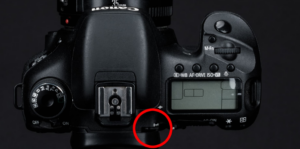
What the optical viewfinder actually showed you
An optical viewfinder in a single lens reflex is a clever piece of glass. The image-forming light from the lens hits the mirror, bounces up into a pentaprism, gets corrected for orientation, and arrives at your eye. What you see is the scene itself, in real time, at the speed of light. There is no lag because there is nothing to process. The frame goes dark for a fraction of a second only when the mirror flips up to expose the sensor, and even that delay is mechanical and predictable.
This is its great strength. In bright daylight you see the scene as it is, with the full dynamic range of your own vision. A backlit subject still has shape and detail in the shadows because your eye adapts the way it always does. The image never freezes, never stutters, never shows banding. It is also independent of battery state, in the sense that even with the camera off you can frame a shot, though you cannot fire the shutter.
What it did not show you
The optical viewfinder shows the scene, not the photograph. Exposure is invisible until you check the meter, and the meter is a single number or a needle, not a preview. A buyer’s overview of how the two camera classes differ goes into the body-level tradeoffs that come along with the viewfinder choice, since they are bundled together in practice. White balance is invisible. The depth of field on the sensor will not match what you see in the finder unless you press a separate preview button, which closes the aperture and darkens the image considerably. Manual focus is judged against a focusing screen that, on most modern bodies, was optimised for autofocus and is not especially helpful for fine focus by eye.
For decades photographers worked around this by chimping. Frame, shoot, look at the rear screen, adjust, shoot again. The optical viewfinder was a starting point. The decisive image lived on the card.
What the electronic viewfinder changes
The electronic viewfinder is, mechanically, a tiny screen with magnifying optics and an eyecup. You can argue that it has more in common with a television than with a finder. The advantage of treating the eyepiece as a display is that everything the sensor can see, you can see too, before the shutter ever opens.
Exposure preview is the most obvious gain. If you dial in two stops of underexposure, the finder gets darker. If you push it the other way, it brightens. Highlights that will clip on the sensor clip in the viewfinder as well, often with a zebra pattern overlay. You learn to read your exposure inside the finder rather than from the meter, and the meter starts to feel like a backup readout instead of the primary instrument.
White balance and picture style appear the same way. A monochrome preview through a colour viewfinder is genuinely useful for thinking in black and white, because you compose against tonal contrast instead of hue. Focus peaking lights up the sharp edges in a colour overlay. Magnified manual focus is one button press and you are looking at a hundred percent crop in the eyepiece itself, not on a separate screen held at arm’s length.
What it gives up
The electronic viewfinder has a refresh rate and a latency. Both are vanishingly small on modern bodies, often well under ten milliseconds and well over a hundred and twenty refreshes a second, but they are not zero. In very fast tracking work, especially erratic bird flight or unpredictable sport, the difference between optical immediacy and electronic feed is something some shooters still feel, even if they cannot measure it.
The finder also runs on the sensor and the processor and a small backlit panel. That uses power. A mirrorless body with the finder live all day will go through batteries faster than a SLR body of similar generation, and you will carry spares.
Low light behaviour depends entirely on the gain the body is willing to apply to the live feed. In near darkness an optical finder shows you what your eye can see, which is often more than the sensor can read out cleanly. An electronic finder can brighten the scene digitally, which lets you compose where you could not before, but the preview gets grainy and the colour gets unreliable. You see more, but what you see is noisier.
How the change affects the way you shoot
A new shooter coming straight into a mirrorless body will not feel any of this as a transition. The viewfinder simply shows the photograph, the way the rear screen always did, except up against the eye. Exposure is read by sight, manual focus is checked by magnification, and the question of what the meter is doing rarely comes up because the answer is on the screen.
A shooter coming from a long history with an optical finder has more to unlearn. The reflex to chimp goes away, because there is nothing to confirm. The habit of bracketing exposures gets weaker, because you can see the histogram live. Manual focus becomes practical in a way it has not been since manual focus film bodies, since the magnification and peaking together are more precise than any focusing screen ever was.
Hybrid finders and the middle ground
A small number of bodies, notably the Fujifilm X-Pro and X100 series, offer hybrid viewfinders that can switch between an optical rangefinder style window and an electronic panel. The optical mode shows the scene through a separate window with a bright frame overlay. The electronic mode shows the sensor feed. Some implementations even insert a small electronic patch into the corner of the optical view, so you can magnify the focus point inside an otherwise optical frame. The compromise is real, and the result is a viewfinder that behaves like two different cameras depending on which mode you select.
This middle ground is rare and unlikely to spread, since the engineering effort to maintain a dedicated optical path on a mirrorless body is significant and serves a fairly narrow audience. For most photographers the choice is no longer between optical and electronic. It is between an older optical body that they may already own and a newer electronic body that everything else in the market is moving toward. A side-by-side walk through the practical differences between the two is a useful reality check on what is gained and what is given up.
The practical reading
If you are choosing a body now, you are choosing an electronic finder unless you go out of your way to find a remaining DSLR. The interesting question is not whether electronic finders are good enough, since they very obviously are, but how to read what you are seeing through one. The preview is informative but not honest. It is the sensor’s interpretation, with picture profile and white balance and exposure preview baked in, and it can mislead you about what the raw file actually contains.
A useful habit is to glance at the histogram inside the finder rather than trusting the brightness of the preview. The histogram is data, not interpretation, and reading it has the same answer in any finder you point at the same scene. The advice in our notes on reading the rear screen applies inside the eyepiece as well, since the panel is the same kind of display, just smaller and held closer to your eye. Treat the live preview as a guide to composition and a rough exposure check, and treat the histogram as the source of truth. The viewfinder has changed. The discipline of looking carefully at what it shows you has not.